GYRE: FORT MASON PERFORMING ARTS CENTER
Spring 2025
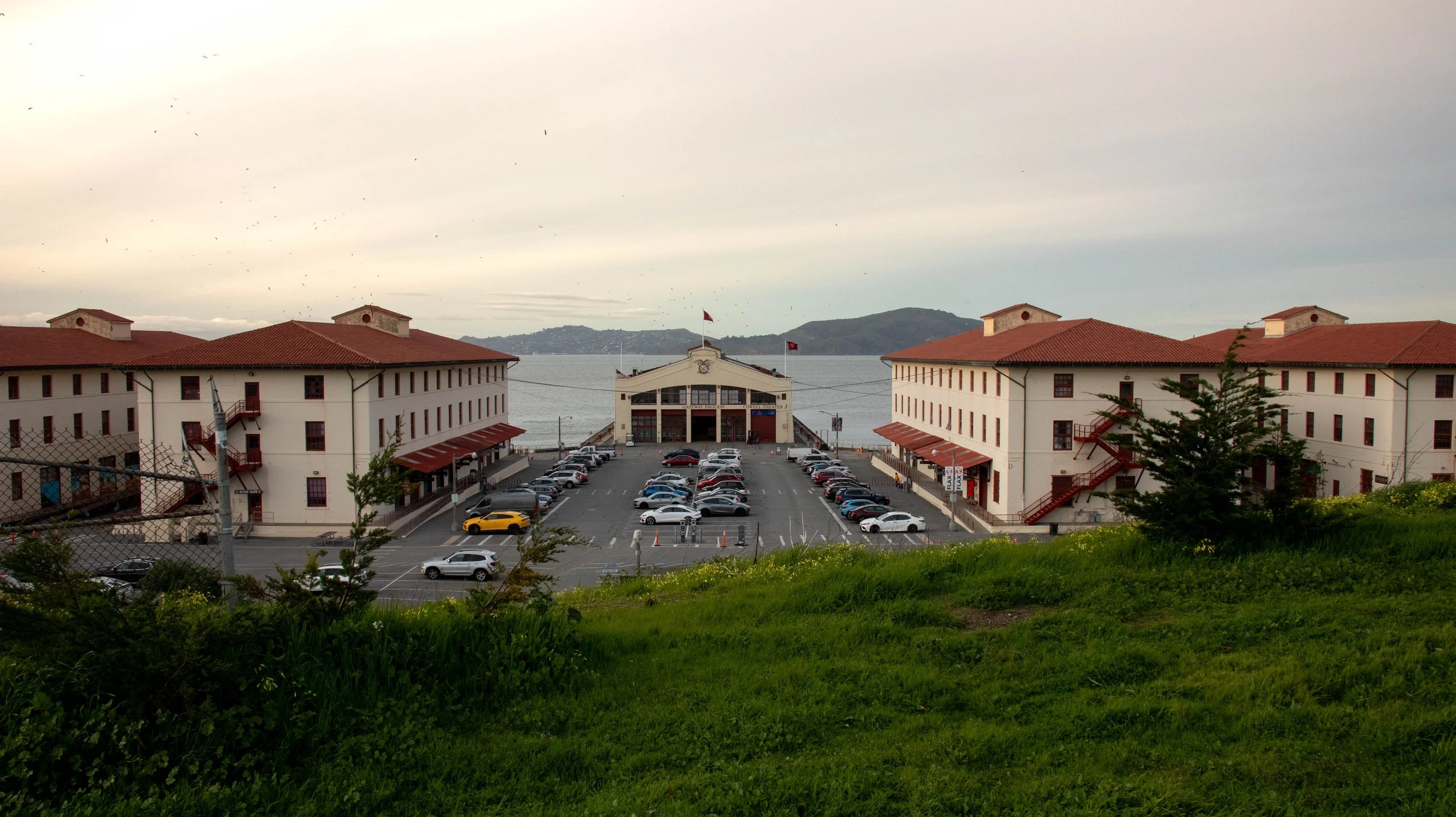
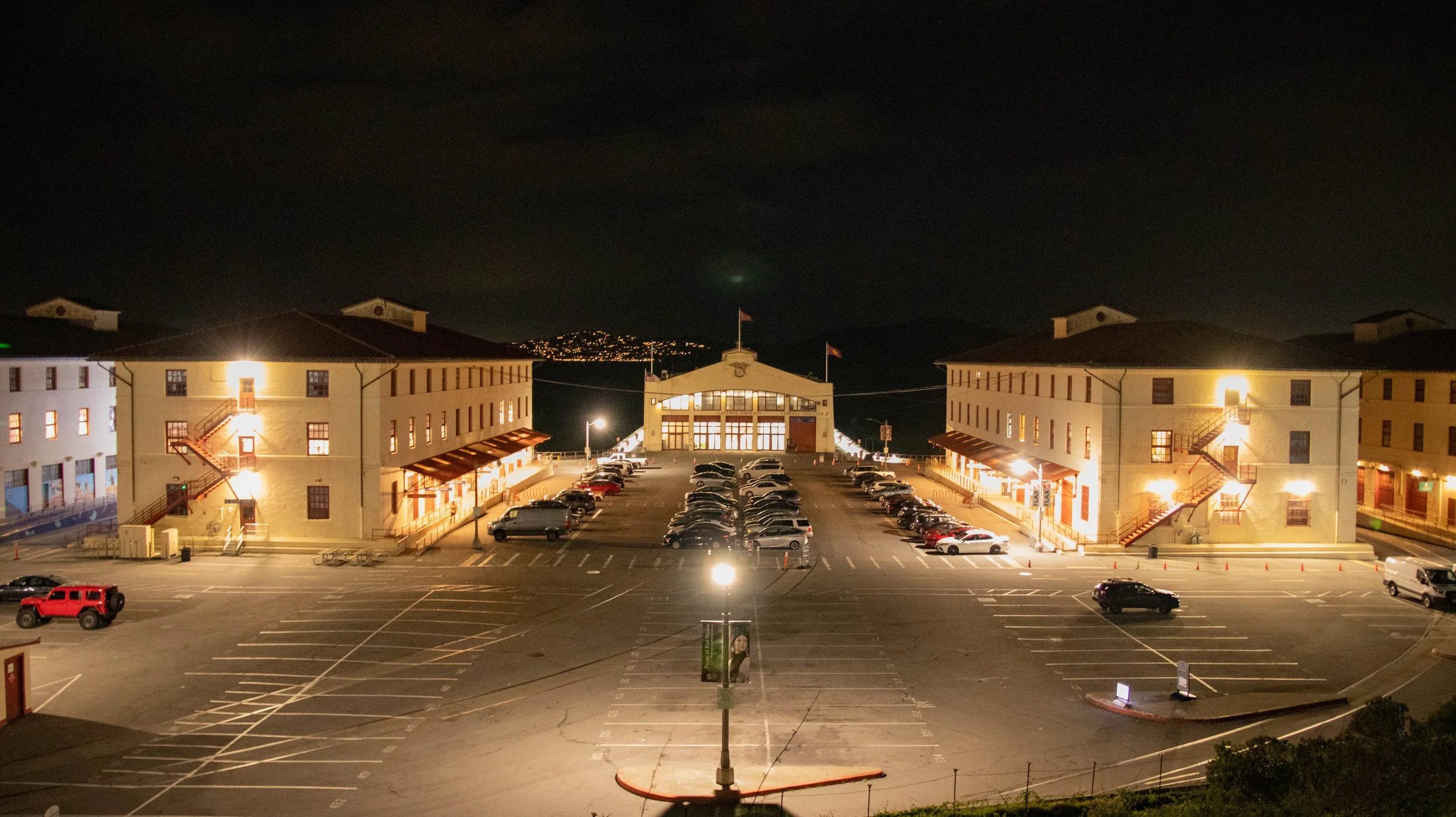
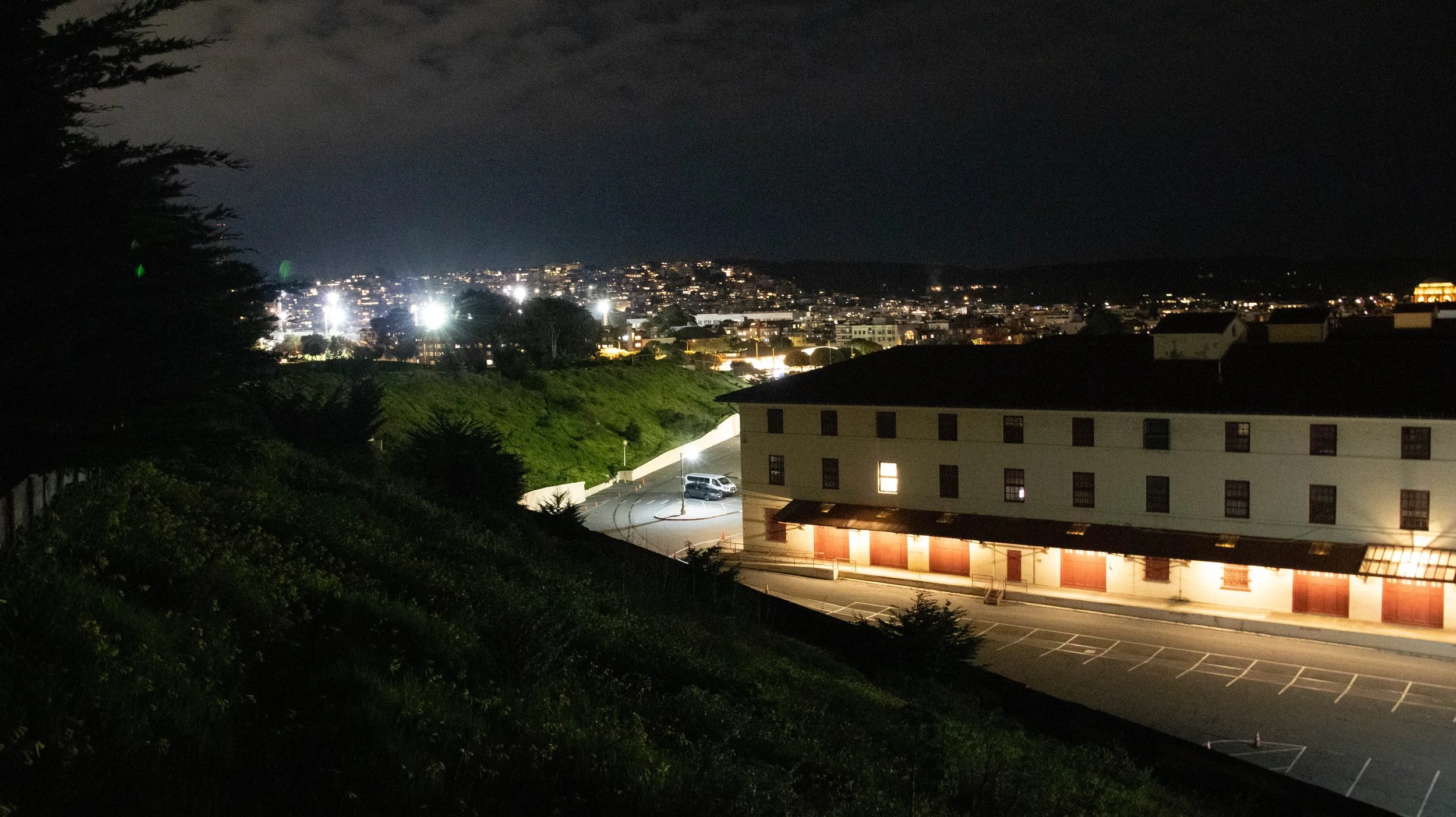
Fort Mason is a former U.S. Army military base established in the late 19th century, historically serving as a key coastal defense and later as a major port of embarkation during World War II. Its robust warehouses, piers, and barracks reflect a utilitarian military logic shaped by topography, hierarchy, and control. Today, Fort Mason has been adaptively reused as a cultural and arts district, housing galleries, performance venues, nonprofit organizations, and public programs, while retaining its strong architectural and spatial identity. Despite this transformation, the site remains physically fragmented, with a pronounced divide between Upper and Lower Fort Mason created by elevation changes, infrastructure, and limited points of connection.
The project aims to blur this division by using a theater as a catalyst that repositions Fort Mason as a cohesive destination rather than a series of disconnected zones. Through its placement and sectional strategy, the building operates as both an anchor and a mediator, negotiating scale, visibility, and movement across the site. The proposal contends with how a new intervention can emphasize and frame the existing Fort Mason buildings without overshadowing them, while simultaneously improving wayfinding and circulation between Upper and Lower Fort Mason, allowing cultural life, movement, and landscape to interweave more fluidly.
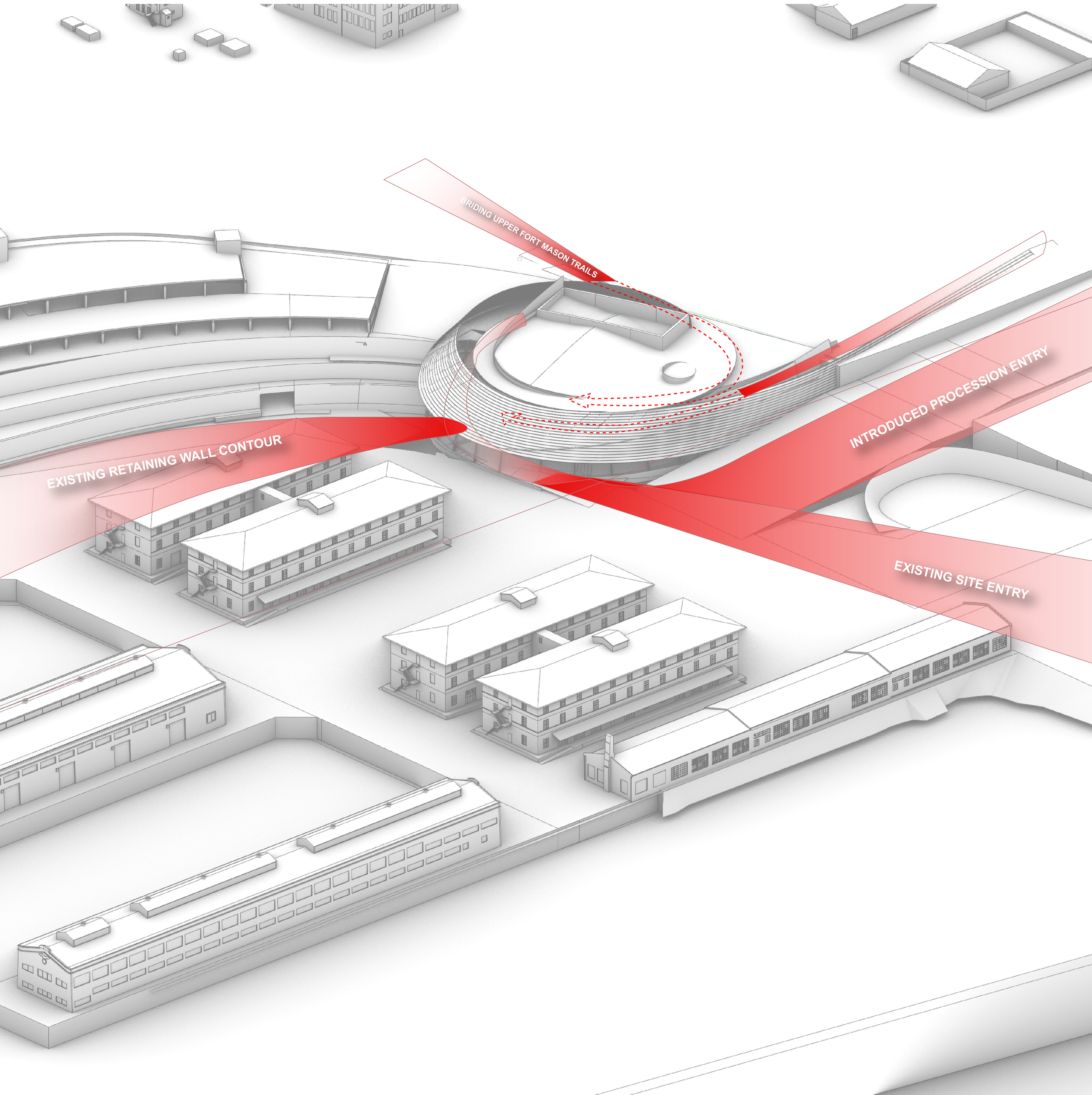
Site Constraints and Urban Strategy
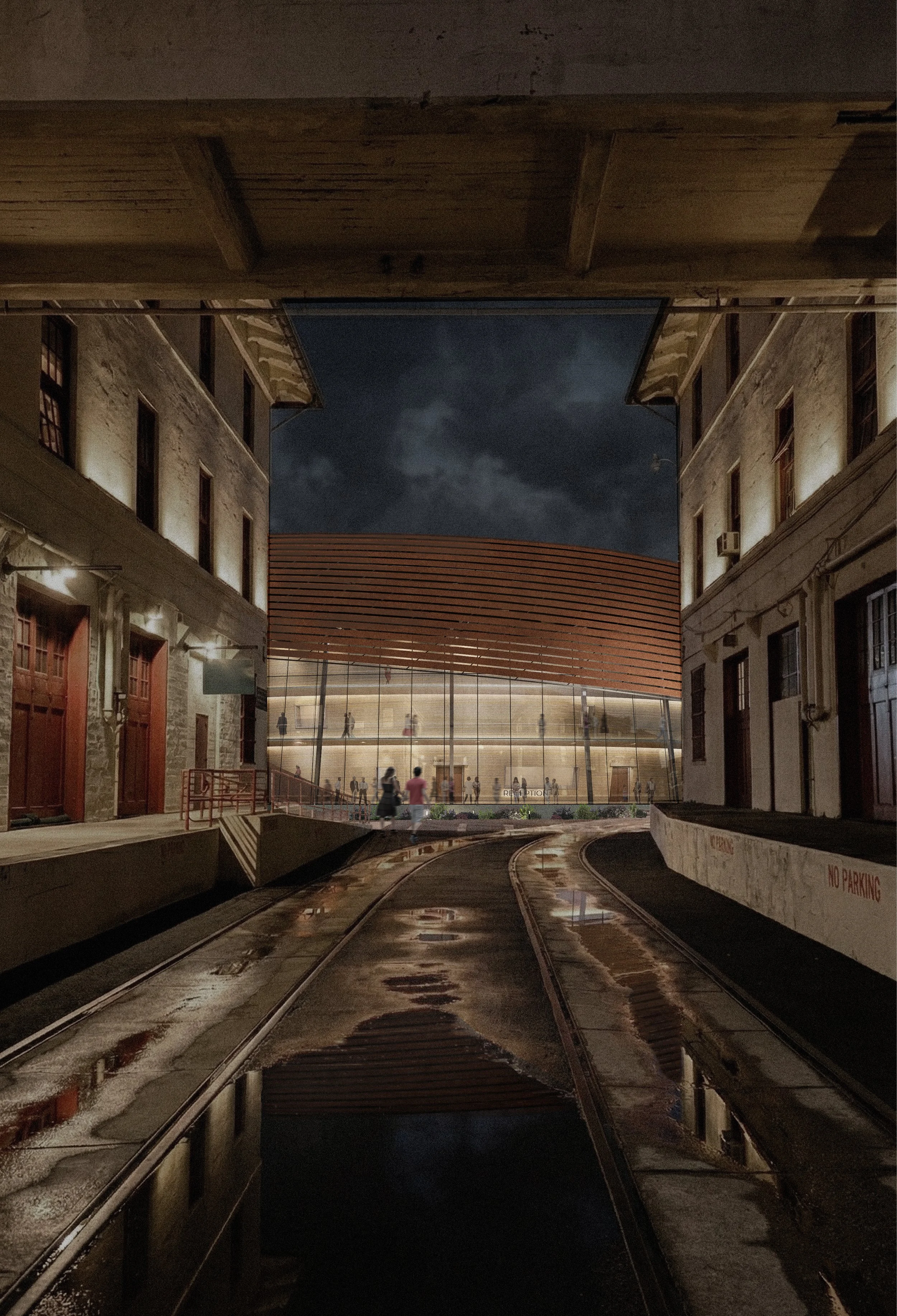
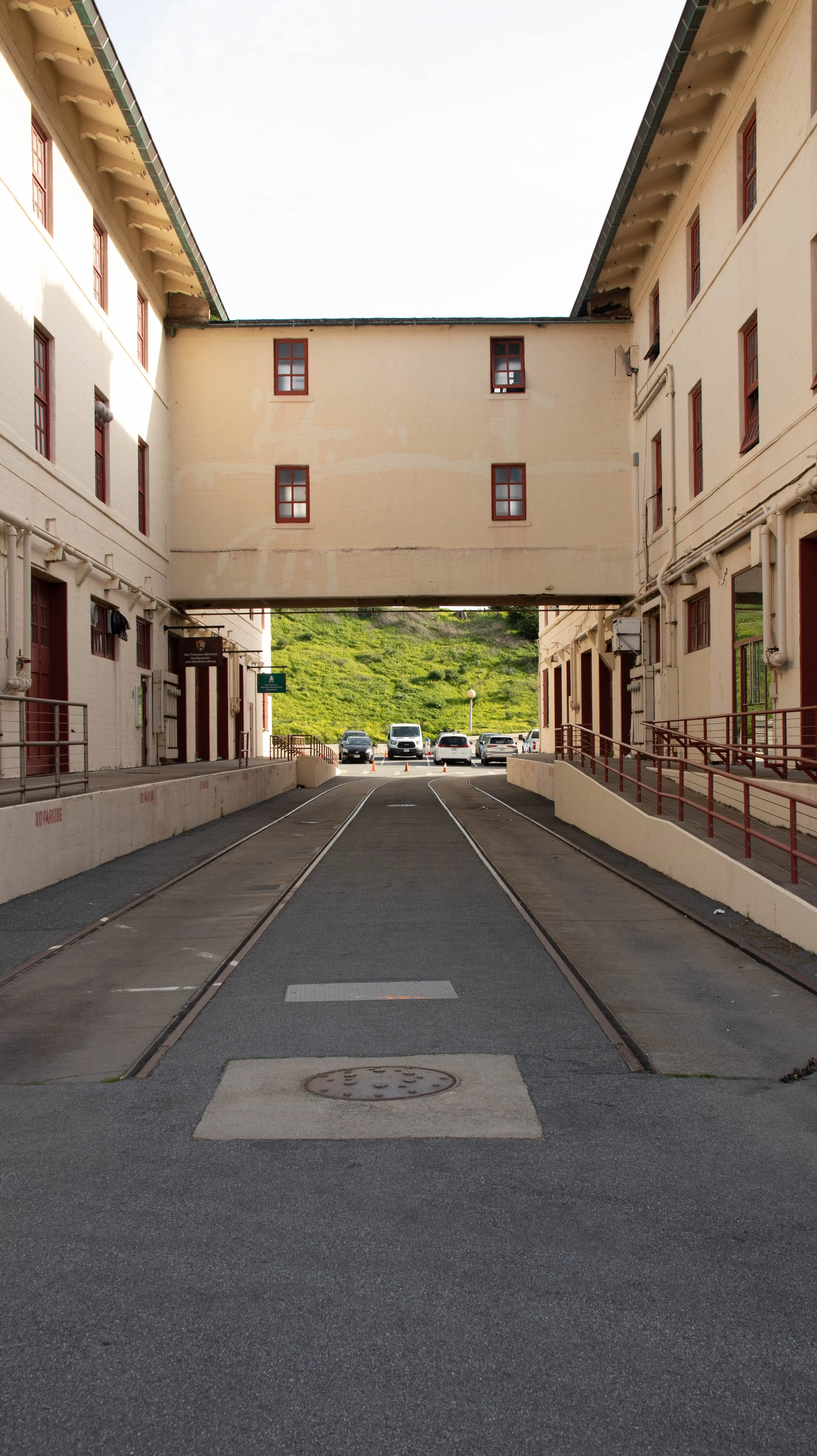
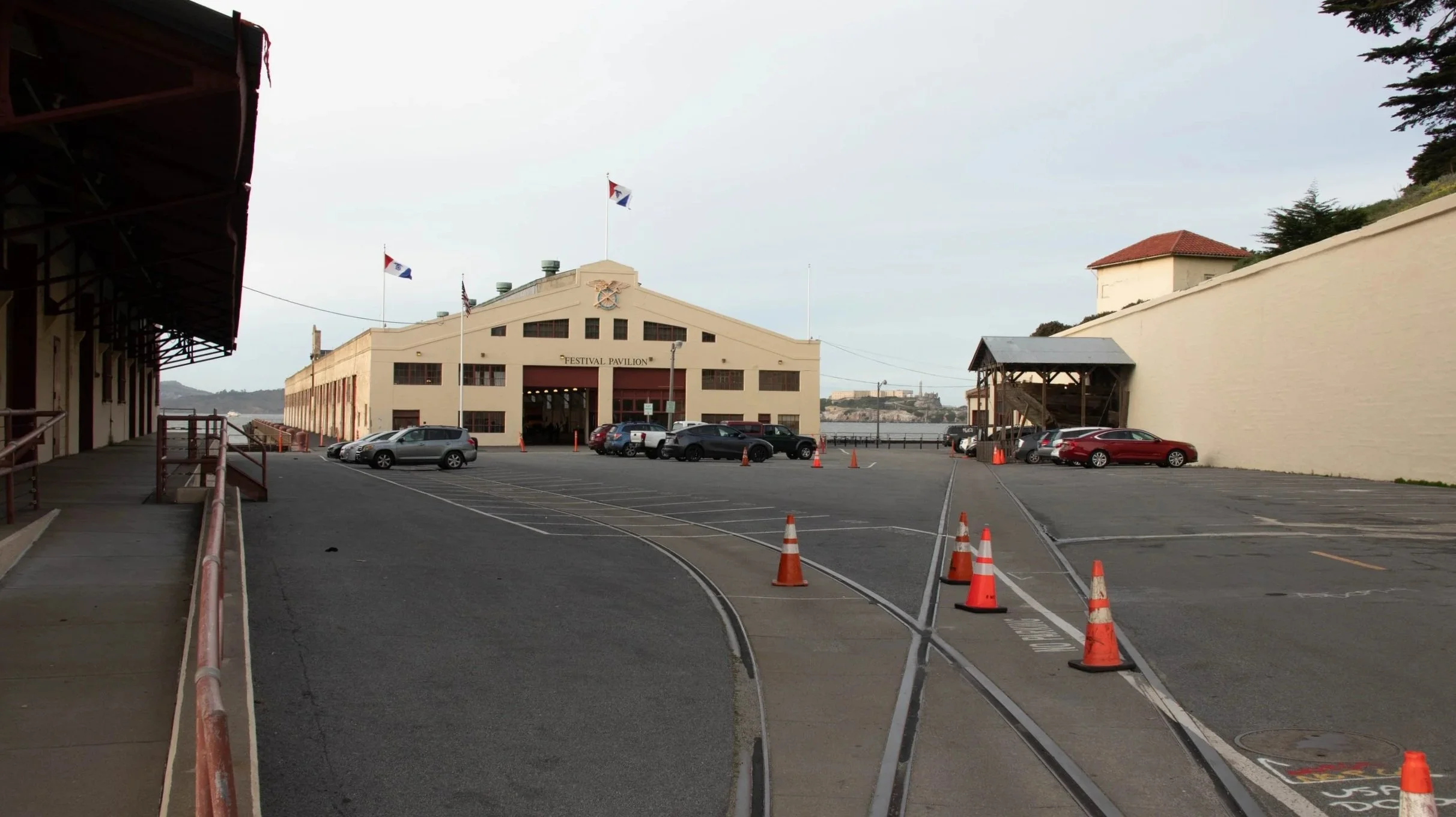
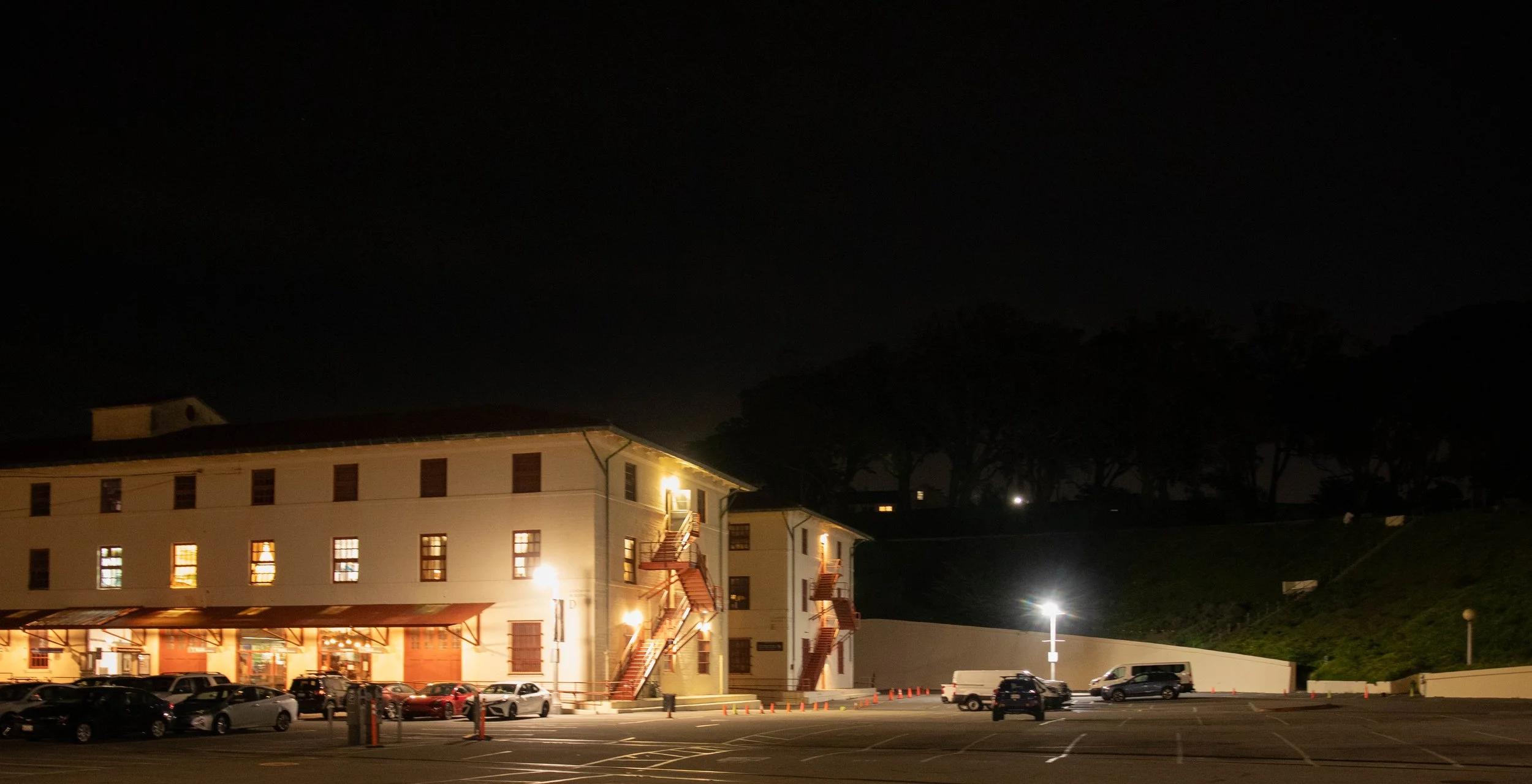
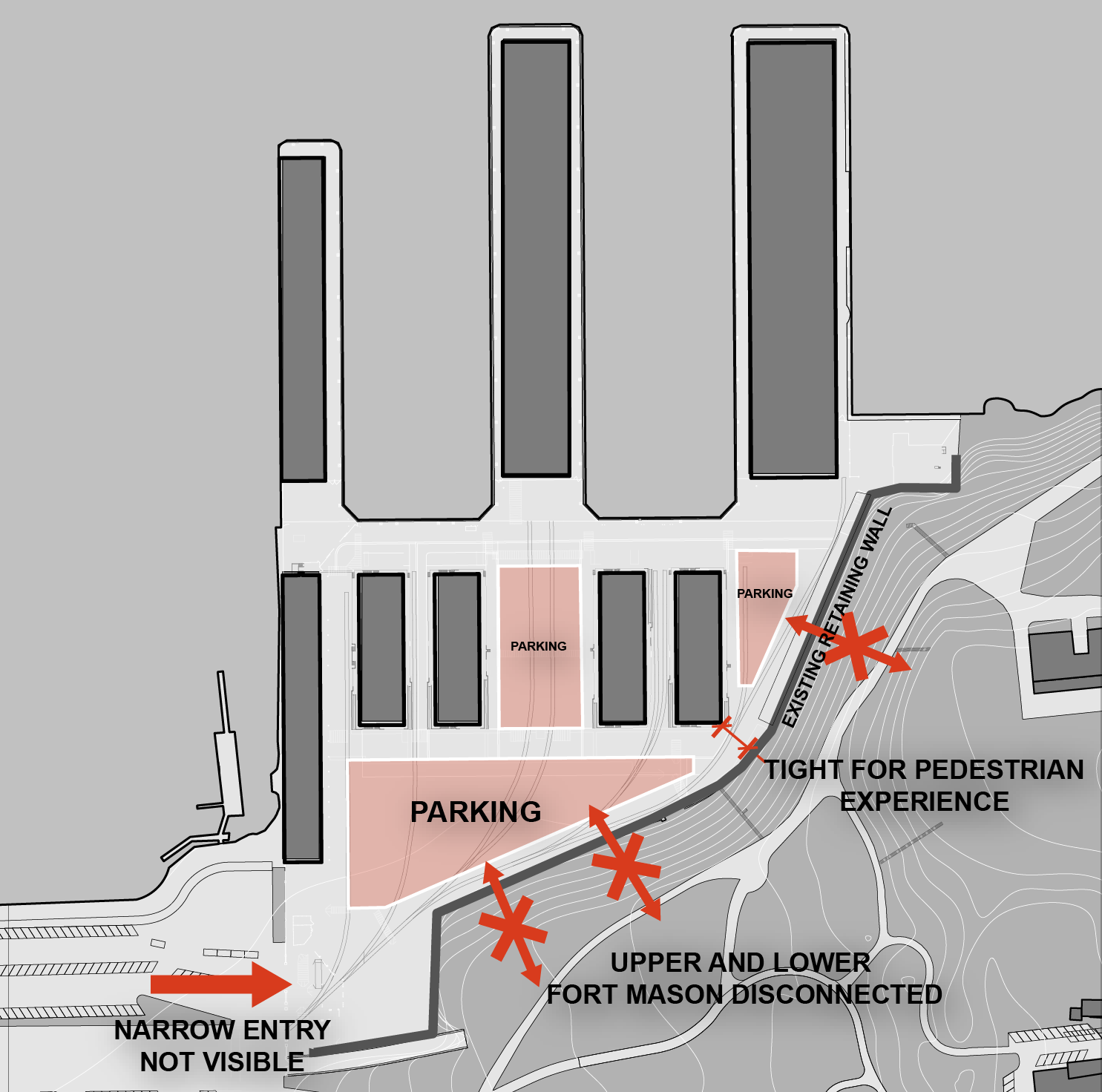
The site’s primary constraint is that Lower Fort Mason, where most public programs are located, is tucked beneath Upper Fort Mason, accessed through a narrow entry with little visual connection to the landmark buildings above. This disconnection is largely a result of the site’s topography, which has been repeatedly reshaped over time to accommodate changing military needs. Much of the ground plane is dominated by parking, creating narrow pinch points and limiting permeability.
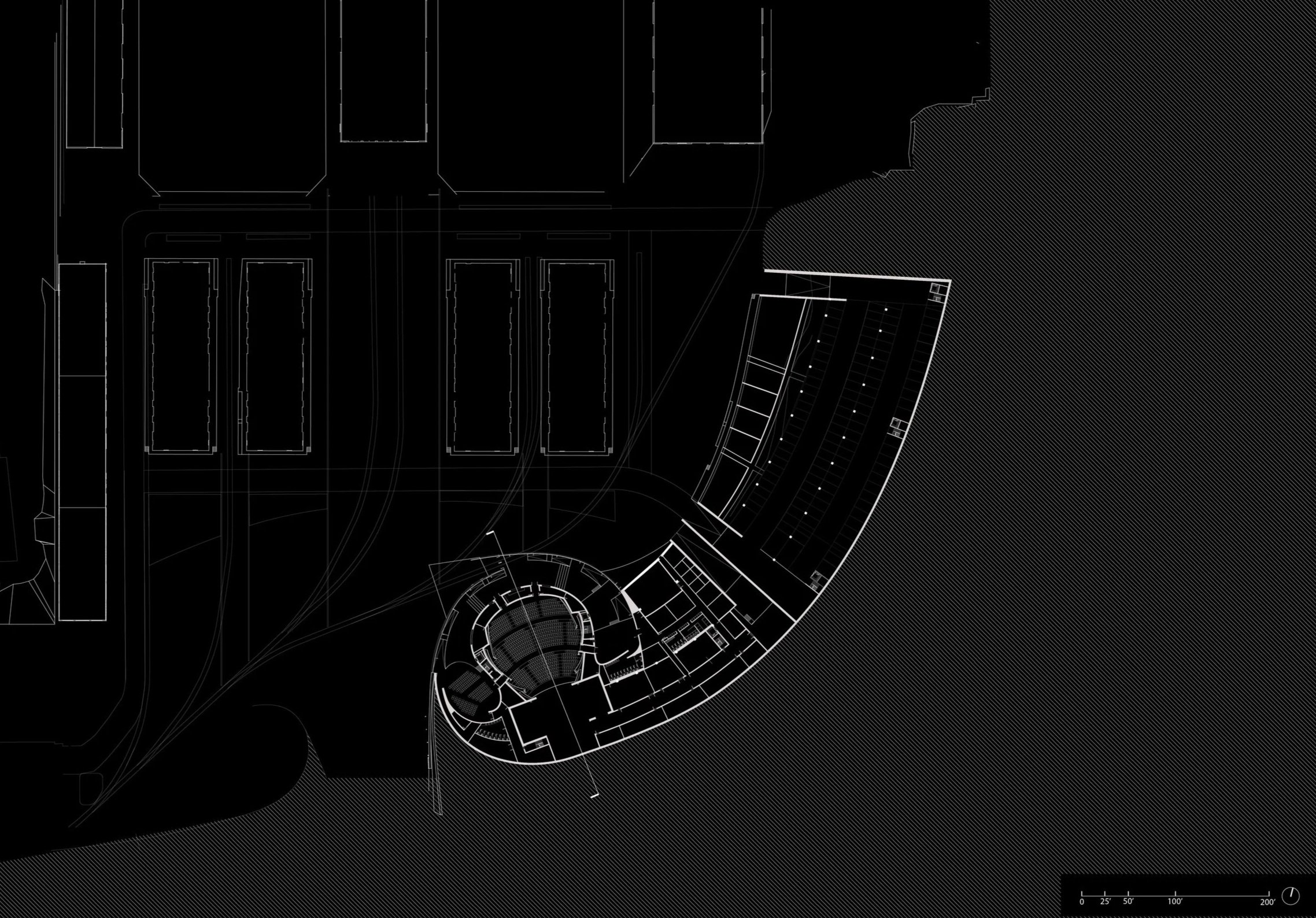
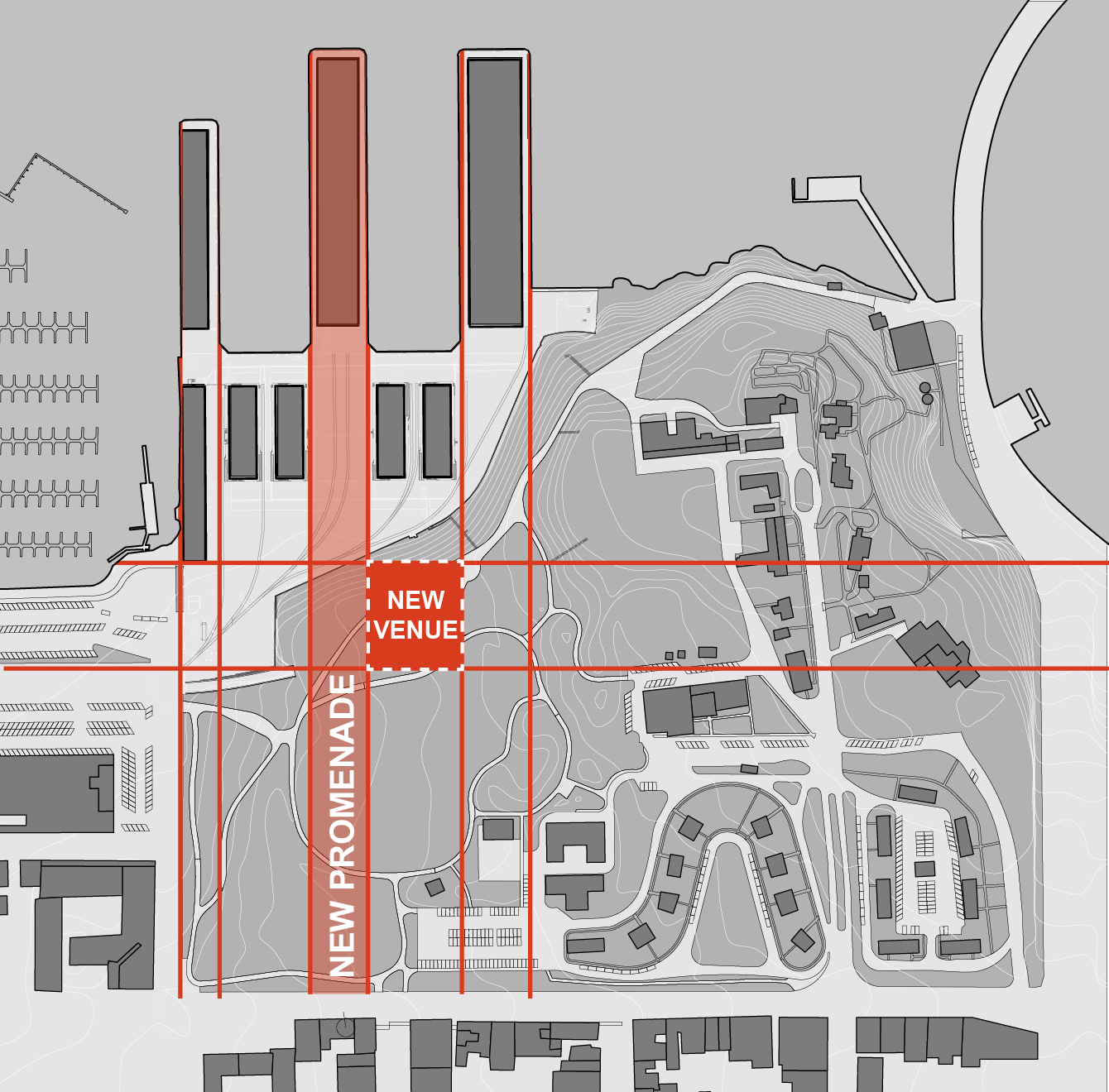
A clear spatial dichotomy exists between the rational grid of the landmark buildings and the curved retaining wall with its sinuous park paths. In response, the proposed urban strategy introduces a gentle slope from Lower Fort Mason to Bay Street, forming a grand entrance and establishing a stronger visual presence for the campus along Upper Fort Mason. The theater is positioned at the intersection of the primary cut and the existing curved retaining wall, set back and oriented toward the Lower Fort Mason entry. This node operates as a vortex, using the building itself as a system of pathways that draws people from the park to the theater and down into Lower Fort Mason, and vice versa.
Urban Plan
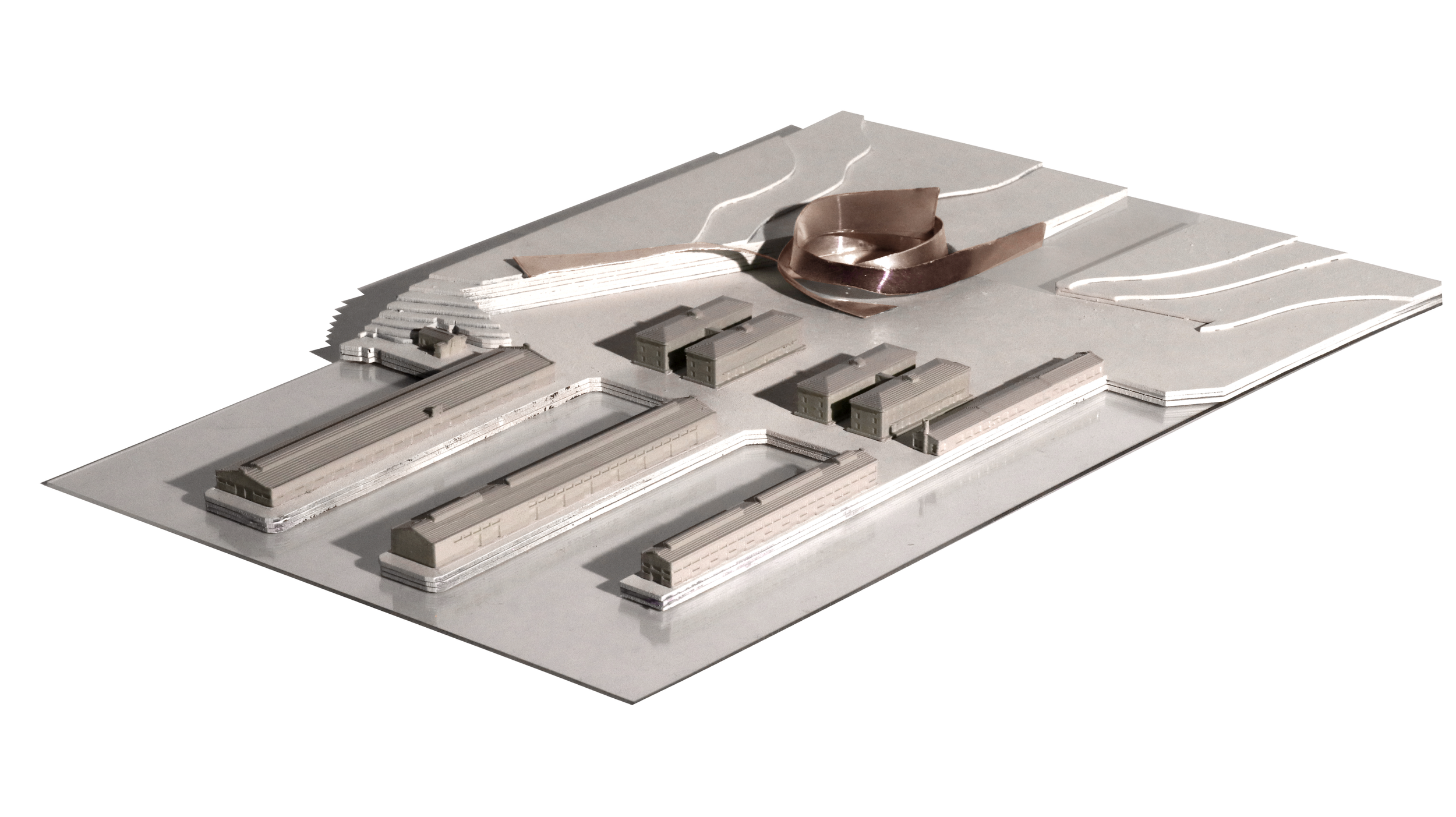
Curved Ribbons as Circulation: Concept Model
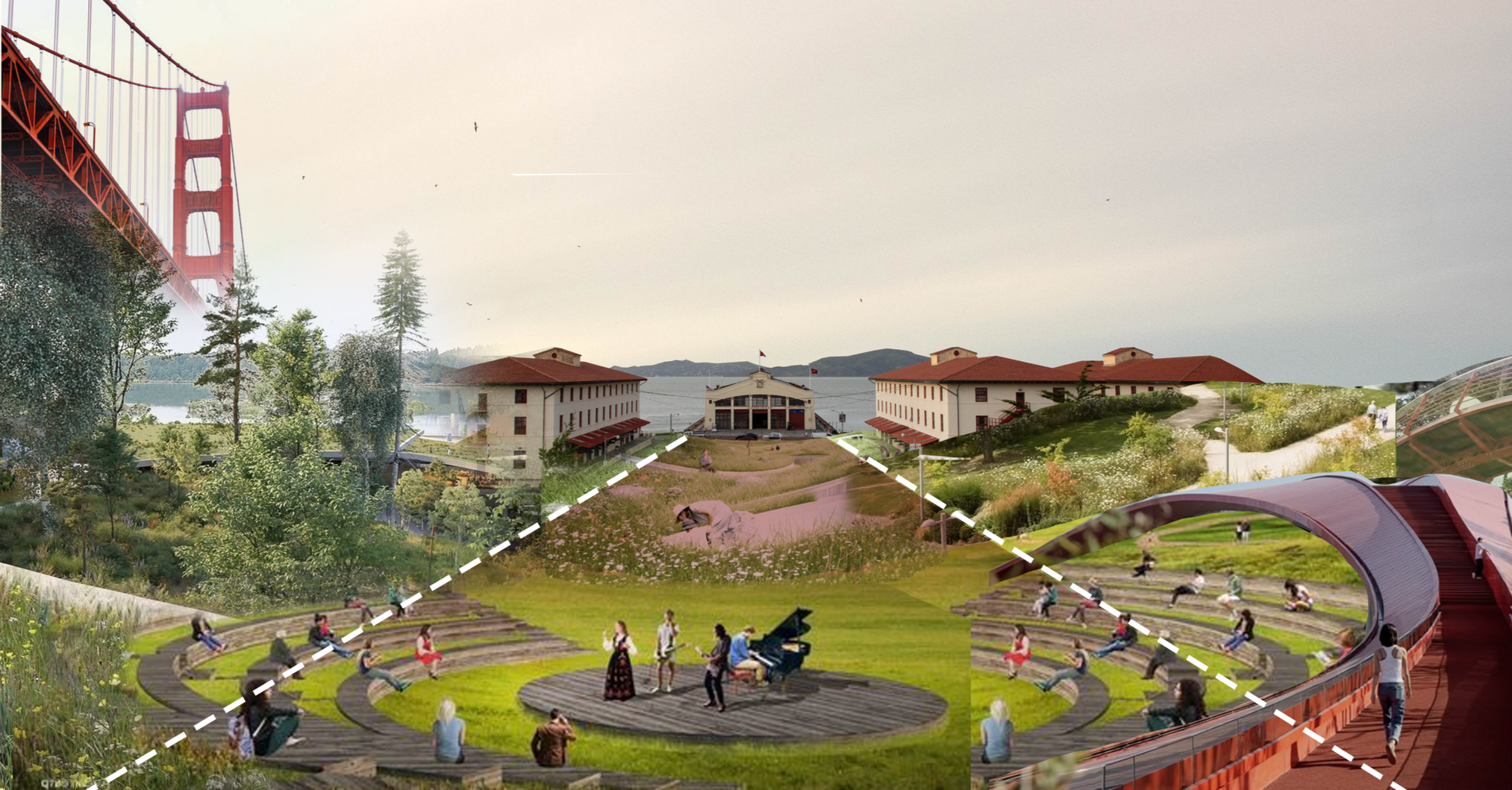
Conceptual Collage of New Promenade
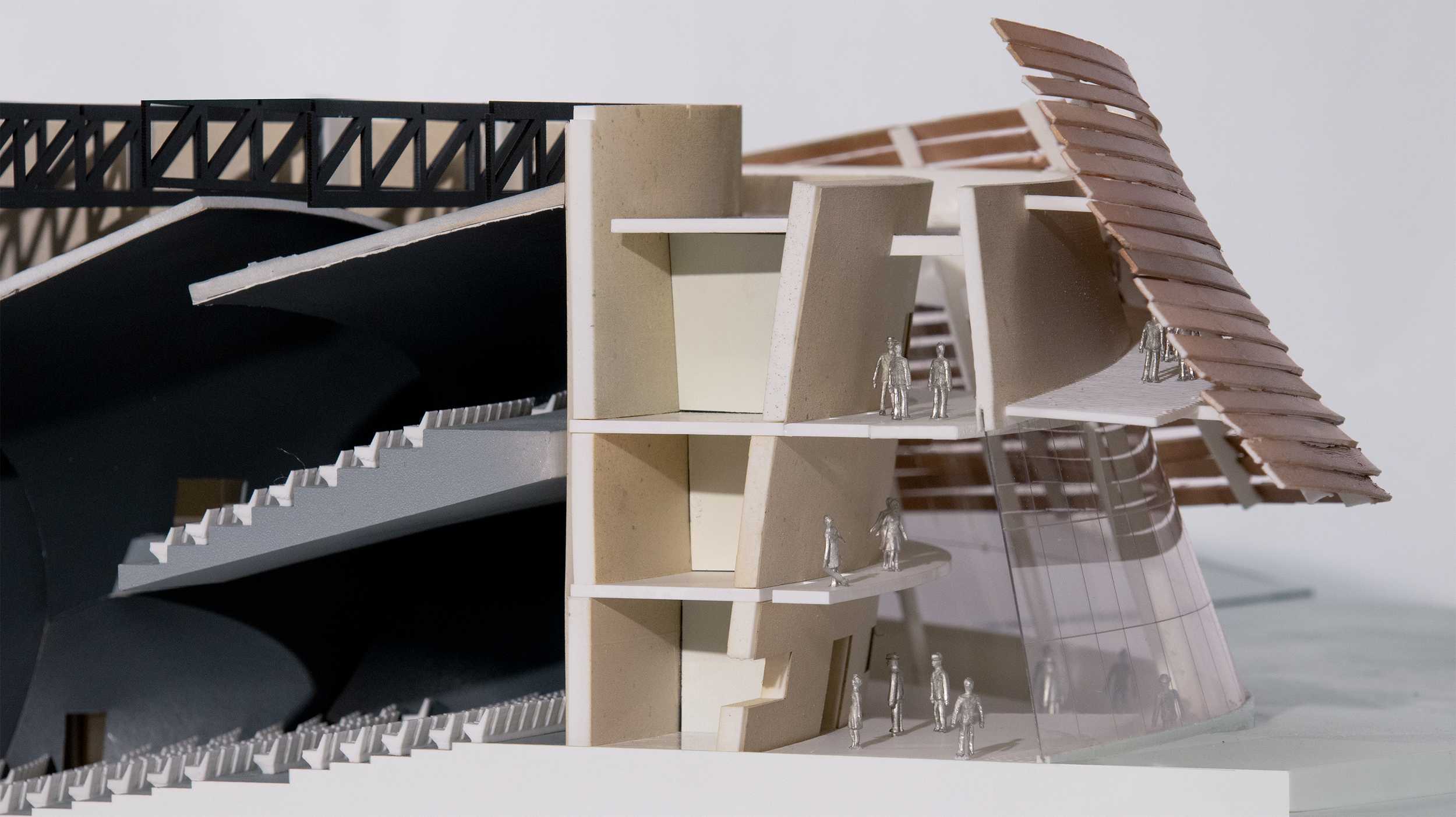
Front of House
The building’s morphology is shaped by layered curves inspired by the retaining wall and the park’s sinuous pathways, extending the experience of pedestrian movement into the interior and allowing continuous connections between different points of the building. As part of the larger intervention, existing parking is relocated into a structure embedded within the hillside, freeing the ground plane of Lower Fort Mason to become an active public plaza. Four access points anchor the building and choreograph arrival: a processional descent along the main axis that reveals the entrance at the end of the cut, a gateway at the intersection of the node and retaining wall connecting Pier 1 and parking, an interior walkway carved through the earth from Upper Fort Mason, and an exterior perimeter path that creates a visual experience walking from Upper to Lower for Mason. These pathways collectively shape the massing and converge into the front-of-house, conceived as a layered sequence of platform spaces that wrap the performance chamber and activate the campus. Acting as an antechamber of circulation before the theater itself, this zone is a fusion of movement, gathering, and pausing, while a thickened rammed earth wall between foyer and chamber houses ticketing, merchandise, coat check, and bar services.
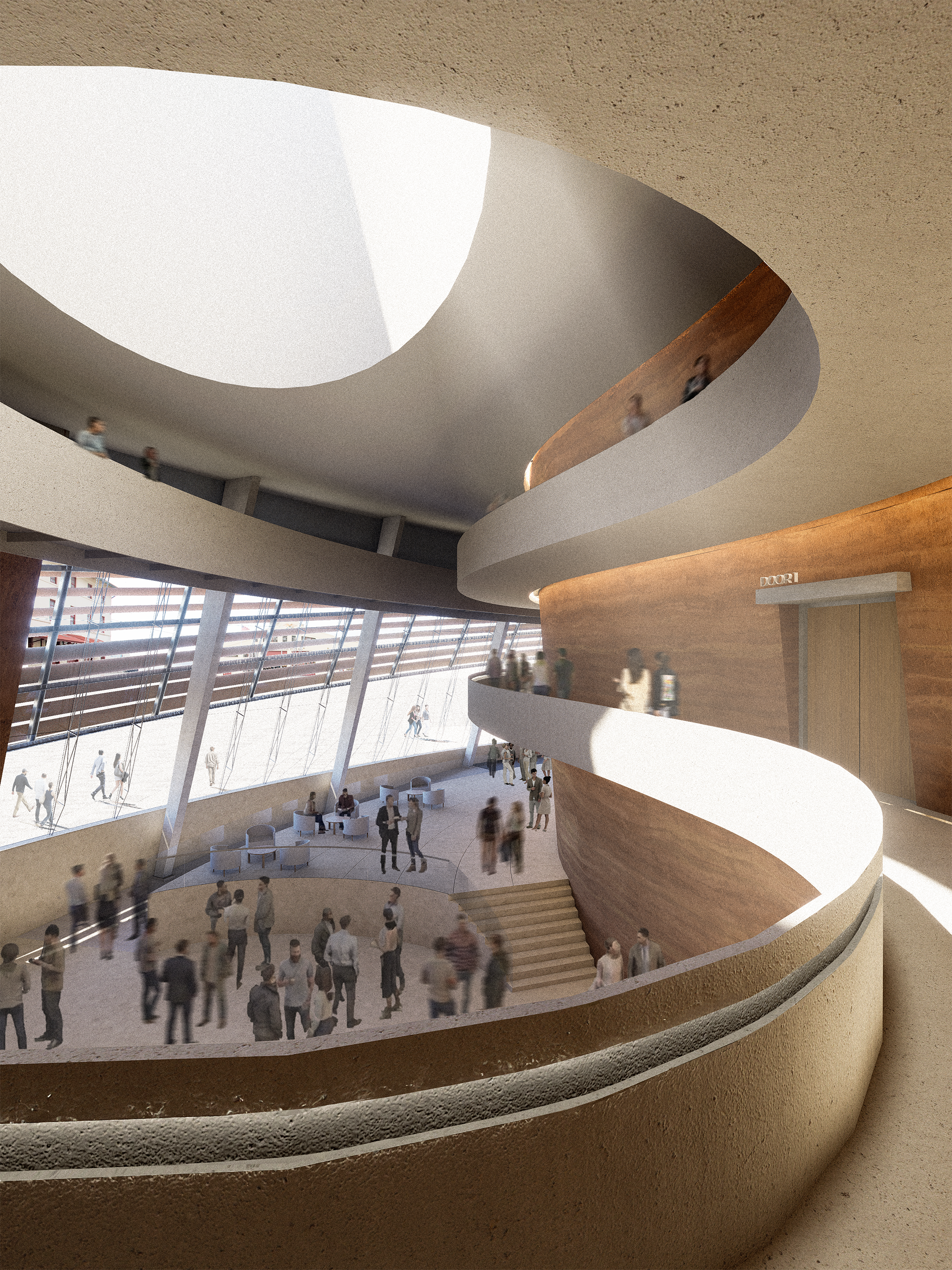
Front of House Experiencce
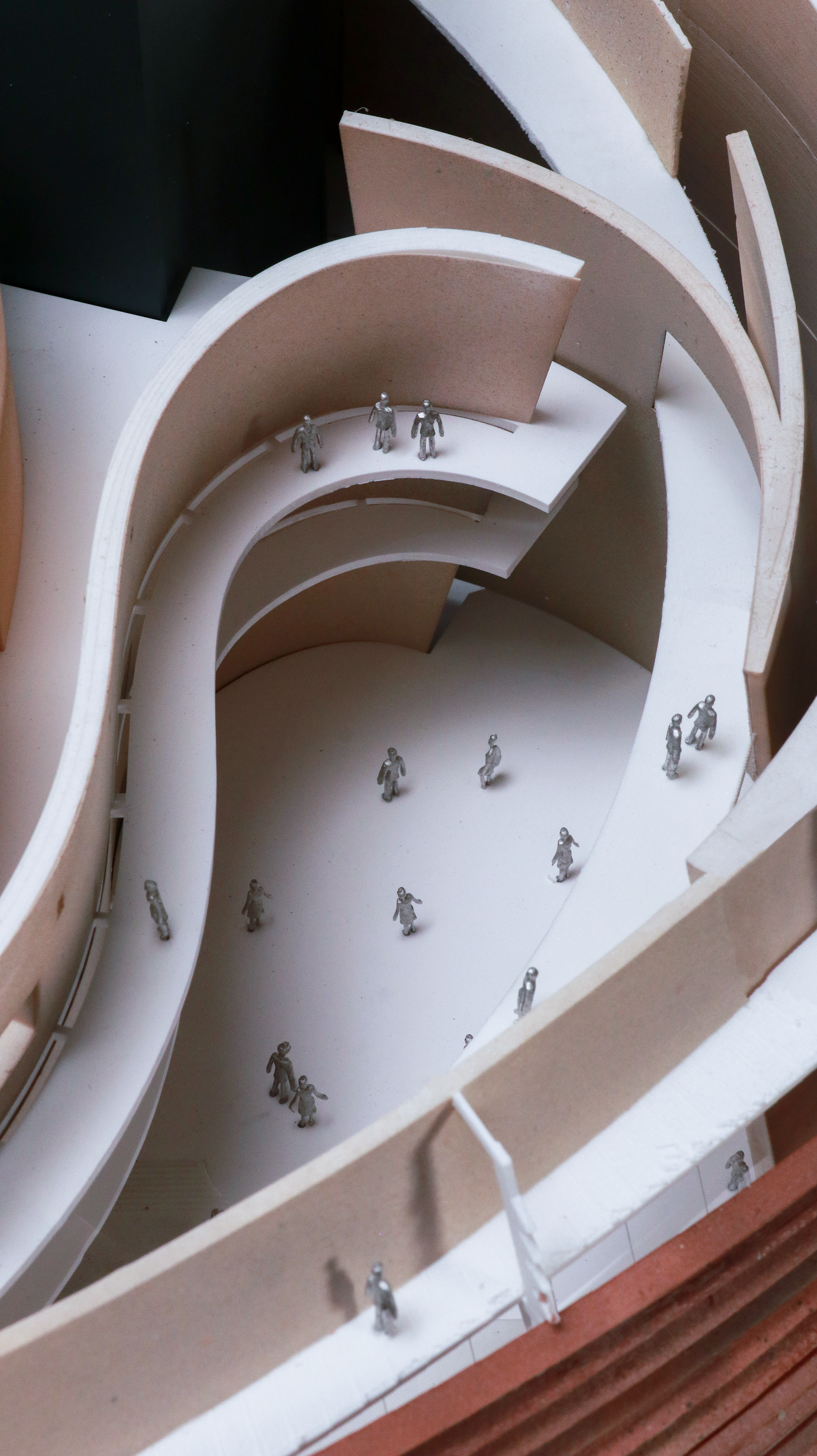
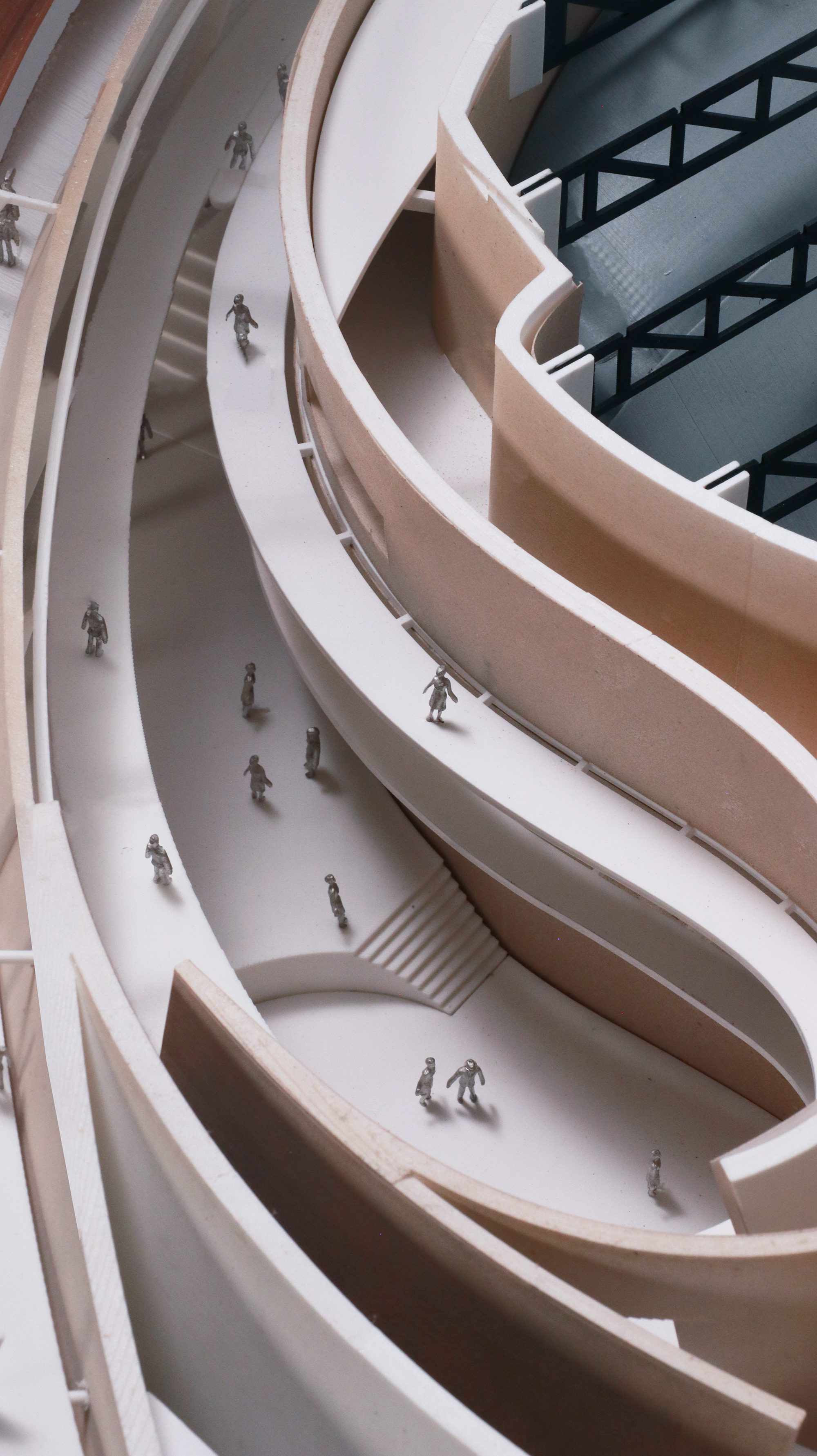
Circulation
House
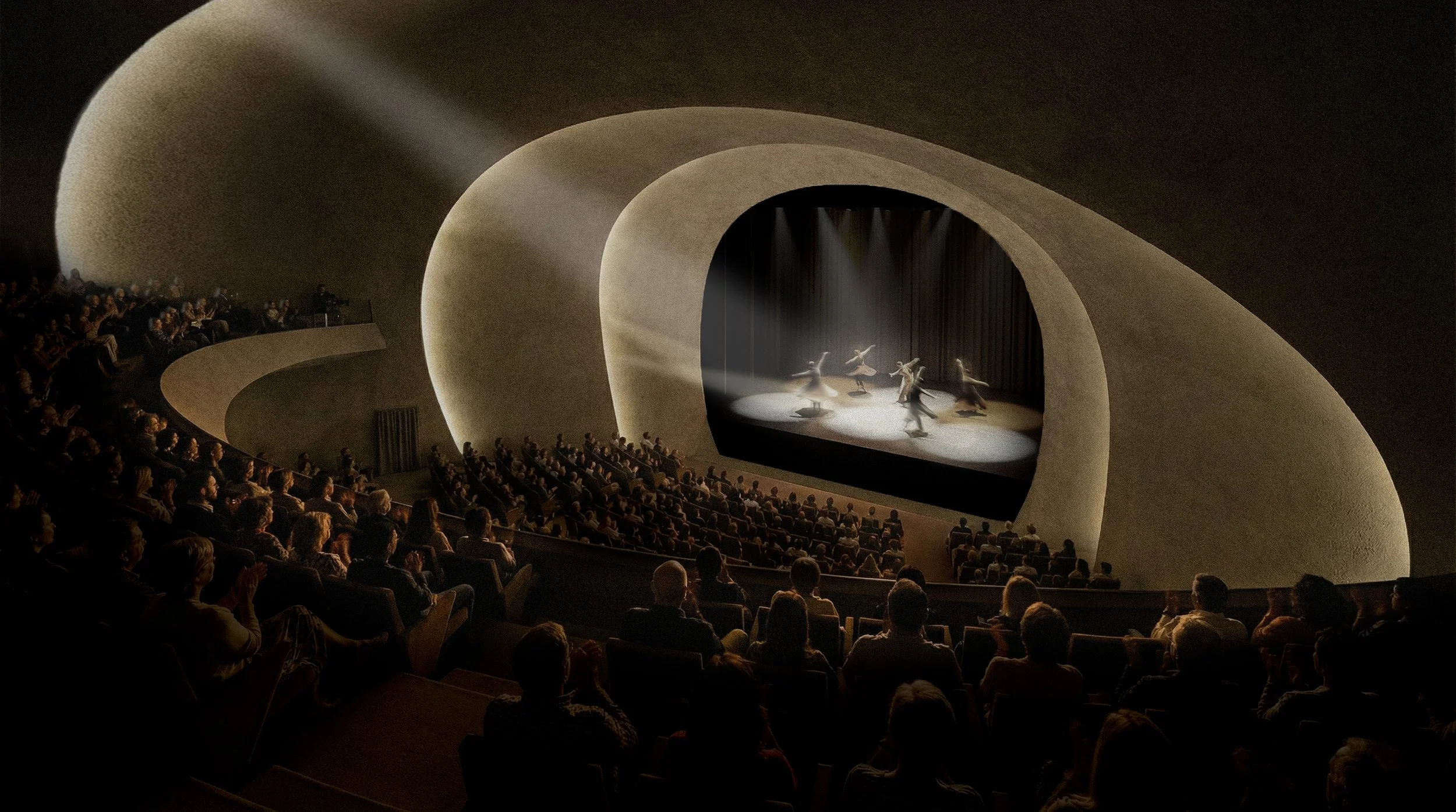
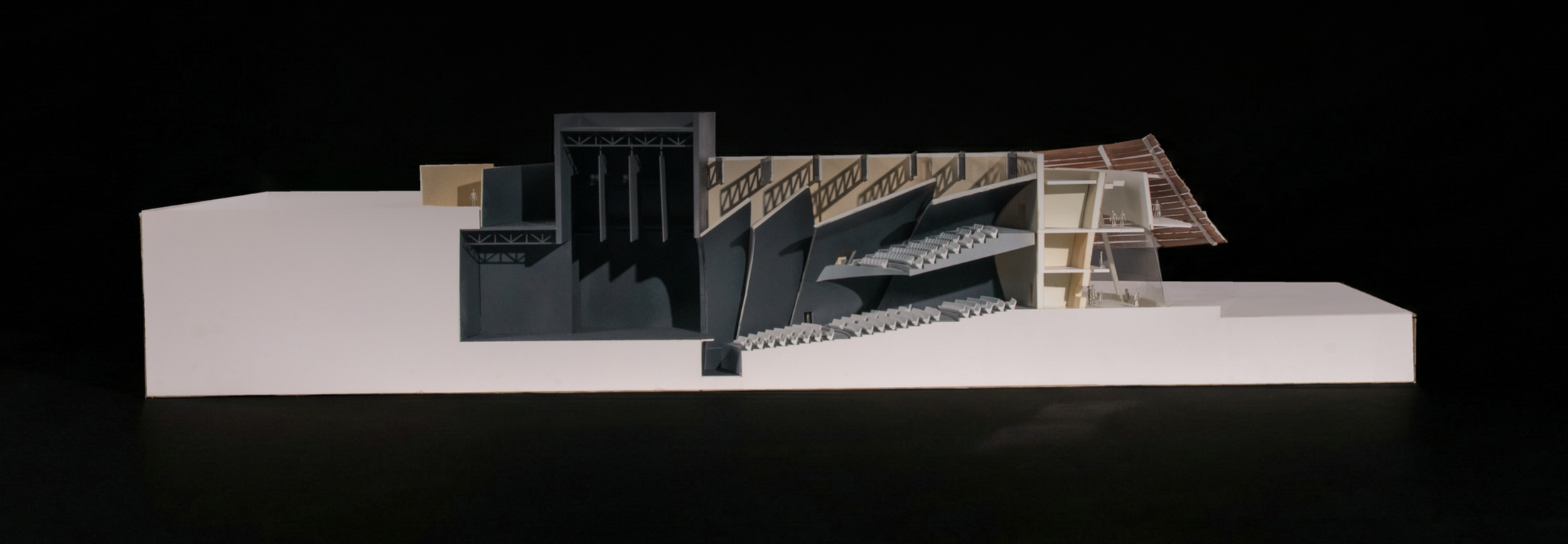
The house is a 1,000-seat theater with 700 seats at the orchestra level and 300 in the balcony, supported by a fly loft and orchestra pit that allow flexibility for dance, opera, drama, and music. While the overall building reads the curve vertically to choreograph circulation, the morphology of the theater rotates this logic ninety degrees, forming a sequence of portals that compress and release before opening toward the performance. Within the chamber, the seating steps and sweeps in a continuous curve, tightening sightlines and creating a shared focus that draws the audience toward the stage. The curved geometry enhances acoustic performance and intimacy, allowing the room to feel both collective and close. Flexible stage infrastructure and the orchestra pit enable multiple configurations, supporting a range of performance types while maintaining a cohesive spatial experience for both performers and audience